COLORS & BASE PATTERNS
Solid — A solid-appearing German Shepherd has little or no visible patterning in the pigmented portions of the coat. Solid coloration can result from different genetic mechanisms, including recessive black associated with the A (ASIP) locus and dominant black associated with the K locus. Other genes can modify black pigment to produce colors such as blue, liver, or Isabella.
Black & Tan / Saddle / Blanket — These terms describe the distribution of dark eumelanin and lighter phaeomelanin across the coat. The amount and placement of dark pigment can vary considerably, producing appearances ranging from a defined saddle to a more extensive blanket. Modern research has identified multiple ASIP haplotypes involved in these coat patterns.
Sable — Sable German Shepherds have hairs in which pigment distribution can create the characteristic shaded or banded appearance. The A (ASIP) locus plays a major role in controlling the switching between eumelanin (dark pigment) and phaeomelanin (red/yellow pigment). Other genes can further modify the resulting color.
Fawn / Red / Cream — The warm portions of a German Shepherd's coat are produced by phaeomelanin. The intensity of that pigment can range from deep red or rich tan to much lighter cream shades. Genes affecting pigment intensity can further modify how light or dark these areas appear.
COLOR MODIFIERS
Blue (Dilute) — Blue results when genetically black eumelanin is diluted to a softer gray or slate appearance. Dilution is associated with variants at the D locus, and dogs expressing dilution inherit applicable dilute variants from both parents.
Liver — Liver occurs when eumelanin that would ordinarily appear black is modified to brown. This affects dark pigment, including areas such as the coat, nose and other pigmented tissues, while phaeomelanin itself is not changed by the Brown locus.
Isabella — Isabella is the appearance produced when both brown/liver and dilution are expressed together. Instead of black eumelanin, the resulting pigment appears considerably lighter, often described as pale brown, taupe or lilac.
SECONDARY PATTERNS
Brindle — Brindle creates dark striping over areas of the coat that would otherwise express phaeomelanin. It is associated with the K locus and can occur over another underlying pattern, which is why brindle German Shepherds can look dramatically different from one another.
Panda — Panda is a distinctive white spotting pattern found in German Shepherd Dogs and is caused by a mutation in the KIT gene. It is inherited as a dominant trait, meaning one copy can produce the Panda phenotype. The Panda pattern overlays the dog's underlying color and pattern rather than replacing them. Published research has also found normal hearing in the affected German Shepherds studied.

Lettie
AKC long Coat Sable
Part of the Liberty Springs Shepherds
The Rich History of Liver German Shepherds
A Naturally Occurring Color
Liver is one of the less commonly seen colors of the German Shepherd Dog. Rather than being a separate breed or the result of crossbreeding, liver is produced by inherited coat-color genetics within the breed.
The American Kennel Club includes Liver among the colors available for registration for German Shepherd Dogs. It is important to distinguish registration from the conformation breed standard, however: the AKC German Shepherd Dog standard currently considers liver a serious color fault.
The Genetics of Liver
Liver coloration is associated with the Brown (B) locus and the TYRP1 gene. Brown/liver is recessive, so a dog must inherit an applicable brown variant from each parent to express the phenotype. Dogs with only one copy can carry the variant without appearing liver themselves.
The Brown locus modifies eumelanin, the pigment that would otherwise appear black, changing it to brown. This can affect the coat as well as other eumelanin-pigmented areas, such as the nose. It does not turn red/yellow phaeomelanin brown.
Because the Brown locus modifies pigment rather than determining the dog's underlying pattern, liver can occur alongside different coat patterns. UC Davis specifically notes that agouti patterns can occur with brown eumelanin replacing black eumelanin.
Liver in Our Program
At Liberty Springs Shepherds, our interest in uncommon colors is always considered alongside the qualities that matter most to our breeding program: health, temperament, structure, pedigree, and purpose.
Liver is also an important component of Isabella, which occurs when brown/liver and dilution are expressed together. Understanding the genetics carried by our parent dogs allows us to make more informed breeding decisions while appreciating the remarkable variety possible within the German Shepherd Dog.

Beta
AKC Isabella and Tan standard coat.
Part of the Liberty Springs Shepherds
The Blue German Shepherd: Understanding Dilution
A Naturally Occurring Variation
Blue in the German Shepherd Dog is a dilute expression of eumelanin, the pigment that would otherwise appear black. Depending on the dog's underlying genetics and pattern, dilution can produce blue versions of solid, sable, saddle, black-and-tan, and other appearances.
Blue is an AKC-registerable German Shepherd color; however, the current AKC German Shepherd Dog breed standard considers blue a serious color fault for conformation showing. This distinction is important: registration and conformation-standard preference are not the same thing.
The Genetics of Blue
Blue dilution is associated with the D locus and the MLPH gene. A dog expressing recognized dilute variants inherits a dilution variant from each parent. Dogs with only one recognized dilute variant generally do not appear dilute but can pass that variant to their offspring.
Dilution modifies eumelanin, changing pigment that would ordinarily appear black to blue/gray. When dilution acts on brown/liver eumelanin instead, the resulting coloration may be described as Isabella or lilac.
Color and Pattern
Blue describes pigment modification rather than one specific coat pattern. A blue German Shepherd can therefore still express an underlying pattern determined by other coat-color genes. This interaction between color and pattern is why blue German Shepherds can vary considerably in appearance.
Genetic Testing
Because dogs can carry dilution without visibly expressing it, DNA testing provides useful information about the color genetics a dog may pass to its offspring.
At Liberty Springs Shepherds, we use genetic testing as one component of our breeding program alongside consideration of health, temperament, structure, pedigree, and purpose.

PC: K9 Pines Kennel
The Fawn German Shepherd: Understanding Yellow & Red Pigment
Understanding Fawn
Fawn describes a warm yellow-to-red appearance produced primarily by phaeomelanin, one of the two major pigment types responsible for canine coat color. The depth of this pigment can vary considerably, creating shades ranging from pale cream and gold to rich tan and red.
Rather than being controlled by a single “fawn gene,” a dog's finished appearance results from the interaction of multiple genes that influence pigment type, distribution, and intensity.
The Role of the A (ASIP) Locus
The ASIP gene, commonly called the A locus, plays an important role in determining where eumelanin (dark pigment) and phaeomelanin (yellow/red pigment) appear in the coat.
Modern genetic testing recognizes several ASIP patterns, including Dominant Yellow, Shaded Yellow, Agouti, Black Saddle, Black Back, and recessive black. Dominant Yellow can produce a relatively clear yellow-to-red coat with minimal dark-tipped hairs, while other ASIP patterns create different distributions of light and dark pigment.
Why Fawn Dogs Can Look So Different
The shade of phaeomelanin itself is influenced by additional genes, which is why dogs with similar underlying patterns may range from light cream to much deeper red. Other coat-color genes can also modify the eumelanin present in the dog—for example, changing black pigment to brown/liver or blue—without changing phaeomelanin in the same way.
This interaction between pattern, pigment type, pigment intensity, and modifiers is what creates the remarkable range of appearances possible within German Shepherd Dogs.

PC: K9 Pines Kennel
The Brindle German Shepherd: A Rare Expression
Understanding Brindle
Brindle is a striking coat pattern characterized by darker eumelanin striping appearing over areas of phaeomelanin pigment. The amount, width, intensity, and visibility of the striping can vary considerably, creating dramatically different appearances from one brindle dog to another.
Genetically, brindle is associated with the K locus (CBD103). The K locus interacts with other coat-color genes, including ASIP (A locus) and MC1R (E locus), which means the dog's underlying genetics influence where and how brindle can be seen.
Brindle and Color
Brindle is a pattern rather than a base pigment color. Other genes can modify the eumelanin involved in the pattern. For example, dilution can change black eumelanin to blue, while brown/liver genetics can change black eumelanin to brown.
This interaction between pattern and pigment is why brindle can produce such a wide range of appearances.
Brindle in the German Shepherd
Brindle is exceptionally uncommon in German Shepherd Dogs today. The documented history of the breed begins with the establishment of the German Shepherd Dog and the registration of Horand von Grafrath in 1899. Historical records and photographs provide fascinating insight into early German Shepherds, but interpreting coat genetics from century-old photographs alone can be difficult.
At Liberty Springs Shepherds, we believe rare color and pattern should never replace the fundamentals of responsible breeding. Our brindle dogs are considered first for health, temperament, structure, pedigree, and suitability for purpose, with their distinctive pattern being an additional part of what makes them unique.

River
AKC German Shepherd Dog
Brindle • Standard Coat
Part of the Liberty Springs Shepherds
The Isabella German Shepherd: When Brown Meets Dilution
Understanding Isabella
Isabella—also sometimes described as lilac—is the appearance produced when brown/liver eumelanin is also affected by dilution. It is not a separate breed or type of German Shepherd, but the result of multiple inherited coat-color genes interacting.
UC Davis describes this interaction simply: the Brown locus changes black eumelanin to brown, while the dilution gene MLPH changes brown eumelanin to lilac or Isabella.
The Genetics of Isabella
Two genetic components are especially important:
- Brown/Liver (B locus – TYRP1): recessive brown variants modify eumelanin that would otherwise appear black, producing brown/liver pigment.
- Dilution (D locus – MLPH): recessive dilution variants lighten eumelanin. Black becomes blue, while brown becomes a paler diluted shade commonly described as lilac or Isabella.
For a dog to express this combination through the currently recognized variants, it must inherit the genetics necessary to express both brown and dilution.
Color and Pattern
Isabella describes the modification of eumelanin rather than one specific coat pattern. The dog's underlying pattern is controlled by additional genes, which means Isabella can appear alongside different distributions of light and dark pigment.
Importantly, the Brown locus does not change red/yellow phaeomelanin in the same way it changes eumelanin. This is why an Isabella & Tan German Shepherd can retain warmer tan areas while the portions that would ordinarily contain black pigment appear diluted brown/taupe.
Isabella at Liberty Springs
Beta provides a living example of this interaction within our breeding program. Her Isabella & Tan appearance demonstrates how pigment modification and underlying pattern work together to create the finished coat.
As with every color represented at Liberty Springs Shepherds, Isabella is only one part of the complete dog. Health, temperament, structure, pedigree, and purpose remain our priorities.
Beta
AKC Isabella and Tan standard coat.
Part of the Liberty Springs Shepherds breeding program
Piebald: Understanding Recessive White Spotting
What Is Piebald?
Piebald describes a white spotting pattern in which areas of the coat lack pigment, creating patches of white alongside the dog's genetically determined underlying color and pattern.
In dogs, piebald and several other forms of white spotting have been associated with the S locus and the MITF gene, which plays an important role in pigmentation.
The Genetics of White Spotting
White spotting genetics are more complex than a simple “white spotting gene.” Research involving MITF has identified genetic variation associated with patterns ranging from relatively limited white markings to much more extensive white spotting.
Expression can also vary, meaning the amount and distribution of white are not always predicted simply from a dog's outward appearance.
Piebald vs. Panda
Although both can create striking areas of white, Piebald and Panda are genetically distinct.
Piebald-type white spotting is associated with MITF/S-locus genetics, while the Panda pattern identified in German Shepherd Dogs results from a separate mutation involving the KIT gene.
This is an important distinction because two German Shepherds may both have significant white markings while having very different genetic causes.
White Spotting and Health
White spotting by itself does not determine the overall health or quality of a dog. Because pigmentation genetics can be complex and some forms of extensive white pigmentation have been associated with hearing differences in dogs, responsible breeding decisions should consider the complete dog, its genetics, health testing, pedigree, and family history.

PC: K9 Pines Kennel
Panda
The Panda German Shepherd: A Unique KIT Mutation.
The Origin of Panda
Panda is a distinctive white spotting pattern in the German Shepherd Dog caused by a mutation in the KIT gene. Research determined that the mutation arose spontaneously in a female German Shepherd born in 2000 and was subsequently passed to her descendants. It was not produced by crossing German Shepherds with another breed.
The Panda mutation is autosomal dominant. A dog with one copy of the Panda variant is expected to display the pattern and has a 50% chance of passing that variant to each offspring.
What Does Panda Look Like?
The Panda mutation produces white spotting over the dog's underlying genetically determined color and pattern. UC Davis describes typical markings involving areas such as the forelock, muzzle, chest, abdomen, collar, and tip of the tail, although the amount of white can vary considerably between dogs.
This means Panda is a pattern—not the dog's underlying color. A Panda German Shepherd may therefore express other colors and patterns beneath or alongside the white spotting.
Panda vs. Piebald
Panda and Piebald can sometimes appear visually similar, but they are genetically different. The Panda pattern identified in German Shepherd Dogs results from this specific KIT mutation. DNA testing can determine whether a dog's white spotting is caused by the known Panda variant.
An Important Breeding Consideration
Panda is normally expressed in dogs carrying one copy of the mutation (N/P). UC Davis reports that dogs inheriting two copies (P/P) are expected to terminate development in utero; no live P/P dogs have been observed.
For that reason, understanding a dog's Panda genotype is particularly important when making breeding decisions.
Panda and Health
UC Davis reports that heterozygous Panda German Shepherds—dogs carrying one copy of the identified mutation—have not been found to have health defects associated with the Panda pattern itself.
Panda at Liberty Springs
Atlas is a Panda German Shepherd within the Liberty Springs Shepherds breeding program. His coat demonstrates how Panda white spotting can occur alongside another underlying color and pattern—in his case, silver brindle.
As with every dog in our program, color and pattern are considered alongside health, temperament, structure, pedigree, and purpose.
Atlas
AKC Silver Brindle Panda Long Coat
Part of the Liberty Springs Shepherds breeding program
The White German Shepherd: Understanding Recessive White
Understanding White
A white German Shepherd is genetically different from an albino dog. In recessive-white German Shepherds, the coat's white-to-cream appearance results from genetics that prevent eumelanin from being expressed in the hair, while normal dark pigmentation can remain visible in areas such as the nose, skin, eye rims, and paw pads.
The MC1R gene (E locus) plays an important role in determining whether a dog can produce eumelanin in its coat. Dogs with two copies of certain recessive red/yellow variants produce only phaeomelanin in their hair, which can range in intensity from red and yellow to very pale cream.
White Is Not Albinism
Recessive white/cream coloration should not be confused with albinism. A white German Shepherd can retain normally pigmented eyes, nose, lips, skin, and other tissues even though its coat appears white or cream.
The underlying genetics for other coat colors and patterns can also still be present but visually hidden by the recessive-white phenotype.
White and the Breed Standard
White German Shepherds have an interesting place in modern breed standards. The German Shepherd Dog Club of America/AKC standard allows considerable variation in color but states that a white dog is disqualified from AKC conformation competition. That is a breed-standard designation and should not be confused with a statement that the dog is not a German Shepherd or is inherently unhealthy.
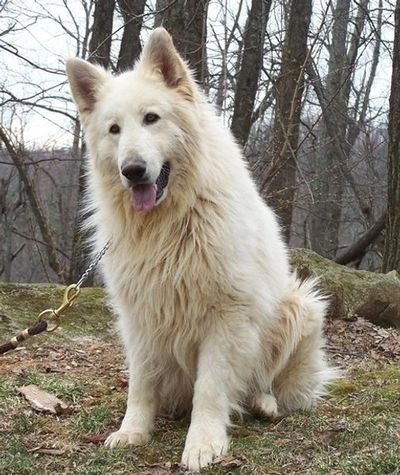
PC: K9 Pines Kennel